

Choosing between online and in-person music lessons can feel like a big decision, especially if you are just starting your musical journey or helping your child begin one. Both options can help you grow as a musician, build confidence, and learn valuable skills. However, the best choice often depends on your schedule, learning style, goals, and the kind of support you want during lessons.
At SoundCheck music school, we understand that every student learns differently. Some students love the convenience of learning from home, while others thrive in a hands-on studio setting with direct, face-to-face instruction. That is why understanding the differences between online and in-person lessons can help you choose the learning path that fits you best.
The Benefits of Starting Guitar Early
Starting guitar at a young age can be a great option for children who are excited about music and ready to learn. Because kids often absorb new skills quickly, early guitar lessons can help them build rhythm, listening skills, coordination, and confidence. This can be especially helpful for children who already enjoy singing, tapping along to music, watching musicians, or pretending to play instruments.
Another major benefit is familiarity. When your child starts early, the guitar becomes part of their normal routine. As a result, practicing can feel less intimidating over time, which is one of the most important parts of musical growth.
Early lessons can also work well for children who are patient enough to follow instructions and practice simple skills. With the right teacher, a properly sized guitar, and a supportive environment, your child can learn basic chords, strumming patterns, rhythm, and simple songs week after week.
Furthermore, guitar lessons can be a great fit for kids who need a creative outlet. Some children feel more confident when they have a fun way to express themselves. Over time, that creativity may help them focus better, stay motivated, and enjoy learning music more.
The Benefits of Waiting Until Your Child is Ready
Waiting until your child is truly ready can also create a stronger learning experience. When students have enough finger strength, hand coordination, and attention span, it can be easier for them to understand instructions and practice correctly. Because of this, waiting a little longer can be especially valuable for children who may become frustrated too quickly.
For example, a guitar teacher can help your child learn how to hold the pick, place their fingers on the strings, sit with good posture, and strum in time. These small details matter, and they can make a big difference as your child develops stronger habits.
Waiting can also help create a more focused experience. At a very young age, distractions can happen easily, such as tiredness, restlessness, or short attention spans. However, when a child is ready, they are more likely to stay engaged and mentally prepared to learn. When your child enters a lesson with interest and focus, they are stepping into a space built for growth, practice, and creativity.
Besides the lesson itself, waiting for the right moment can also help your child feel more connected to music. They may become more excited to learn favorite songs, hear different instruments, join group programs, or become more comfortable playing in front of others. This type of environment can be especially encouraging for kids who want to build confidence beyond private practice.
What Age Helps Your Child Learn Faster
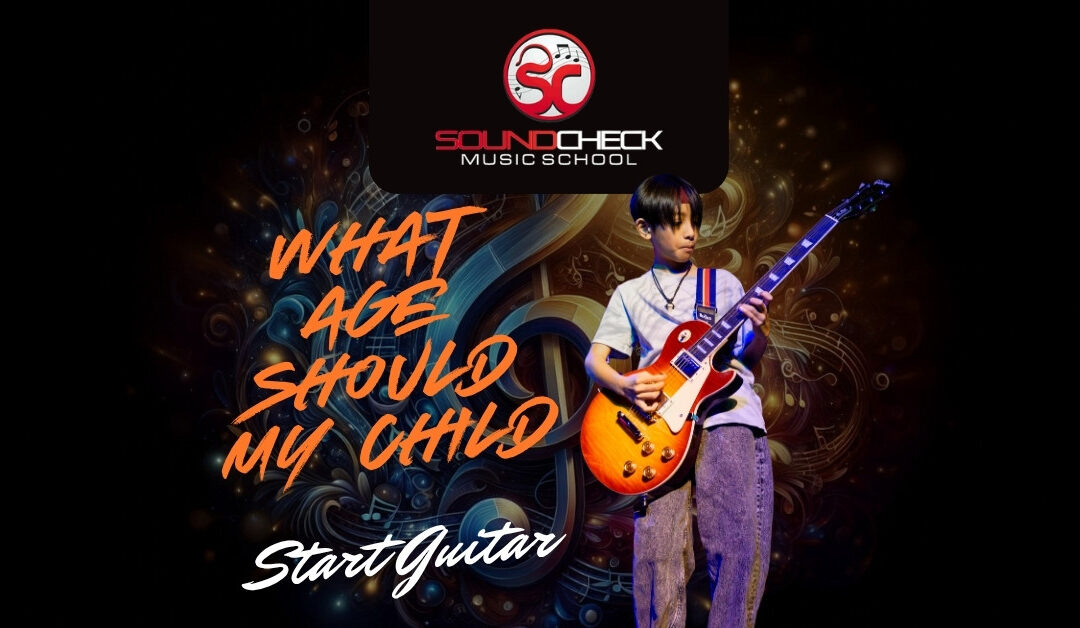
When asking what age should my child start guitar, the answer often depends on the child. Some kids make excellent progress around age 5 or 6 because they are focused, excited, and able to practice with guidance. Others improve faster around age 7, 8, or older because they have more patience, stronger hands, and a better understanding of practice.
Ultimately, the starting age matters, but consistency matters even more. A child who practices regularly and attends lessons consistently will usually progress more than a student who starts at the “perfect” age but rarely practices. Therefore, the best time is often when your child is interested and ready to stay committed.
If your child is excited to pick up the guitar every week, they may be ready to start. But if lessons feel stressful or frustrating, waiting a little longer may be a better fit. In both cases, the right instructor can guide your child, encourage them, and help them build skills step by step.
Younger Students May Be Ready If They Show Interest
Guitar lessons may be the right fit for younger children if they are excited about music and can stay focused for short periods of time. Since young kids may need extra patience, it is important that lessons are fun, simple, and encouraging. This can be helpful for children who love music, enjoy singing along, or show curiosity about instruments.
In addition, younger students can benefit from learning on the right size guitar. A smaller guitar can make it easier for your child to hold the instrument, press the strings, and feel comfortable during each session. This can help Our instructor give advice based on the exact way your child practices at home.
Younger Students May Be Ready If:
- They show interest in guitar or music.
- They can focus for a short lesson.
- They are willing to follow simple instructions.
- They enjoy practicing with support.
- They feel excited to learn songs.
Older Students May Be Ready For More Structure
Older children may be better prepared if they want more detailed instruction and can handle regular practice. Many students, especially beginners, benefit from being able to understand technique, ask questions, and work through challenging parts with more patience.
Moreover, guitar lessons can be a great choice for older kids who are ready to take music more seriously. Being in a structured lesson environment can help them stay engaged, set goals, and make steady progress from start to finish.
Older Students May Be Ready If:
- They can practice between lessons.
- They learn best with clear instruction.
- They have enough hand strength for basic chords.
- They want to play specific songs.
- They are interested in live performance opportunities.
What About Confidence and Performance?
Music is not only about learning notes, chords, rhythms, or technique. It is also about confidence. Whether your child is learning guitar, piano, drums, bass, or voice, they eventually want to feel comfortable playing in front of others, expressing themselves, and enjoying the process.
Guitar lessons can be especially helpful for performance confidence because students get used to playing for instructors and other musicians. If your music school offers live band programs, recitals, or performance opportunities, that can make guitar lessons even more valuable.
However, confidence can also grow slowly at home. Some children may feel safer making mistakes in a familiar space, which can encourage them to try new things. As a result, young guitar students can still grow creatively and musically when they receive the right guidance.
Can Your Child Start With A Trial Lesson?
Yes, and for many families, a trial lesson or first lesson is the best way to see if your child is ready. Your child may start with simple guitar basics and later move into more structured lessons when they are ready for more direct support. Likewise, they may begin with short, beginner-friendly lessons before building up to longer practice sessions.
This flexible approach can help your child stay consistent without feeling overwhelmed. Instead of forcing lessons too soon, you can let your child grow into music at a pace that works for them. In short, having the right support gives your child more confidence in their musical progress.
So, What Age Should My Child Start Guitar?
The honest answer is that many children can start around ages 6 to 8, but every child is different. Younger students may do well if they are excited, focused, and using the right size guitar. Older students may progress faster because they have more patience, stronger hands, and a clearer understanding of practice. The right choice depends on your child’s interest, personality, and readiness.
If your child is eager to learn, guitar lessons may be a great option. If they are still building focus or coordination, waiting a little longer may be better. However, if you want the best starting point, choosing a music school that understands young beginners can give your child the support they need.
Start Learning At The Right Time For Your Child
At SoundCheck music school, We believe guitar lessons should fit your child’s age, personality, and learning style. Whether your child is just beginning, already showing musical interest, or ready for more structured lessons, We are here to help them grow with personalized instruction, supportive teachers, and a clear path forward.
Ultimately, the best time to start guitar is when your child feels excited, supported, and ready to learn. If you are ready to help your child build confidence, improve musically, and enjoy guitar more, We would be happy to help you choose the option that works best for your family. Read more about our Guitar Lessons!